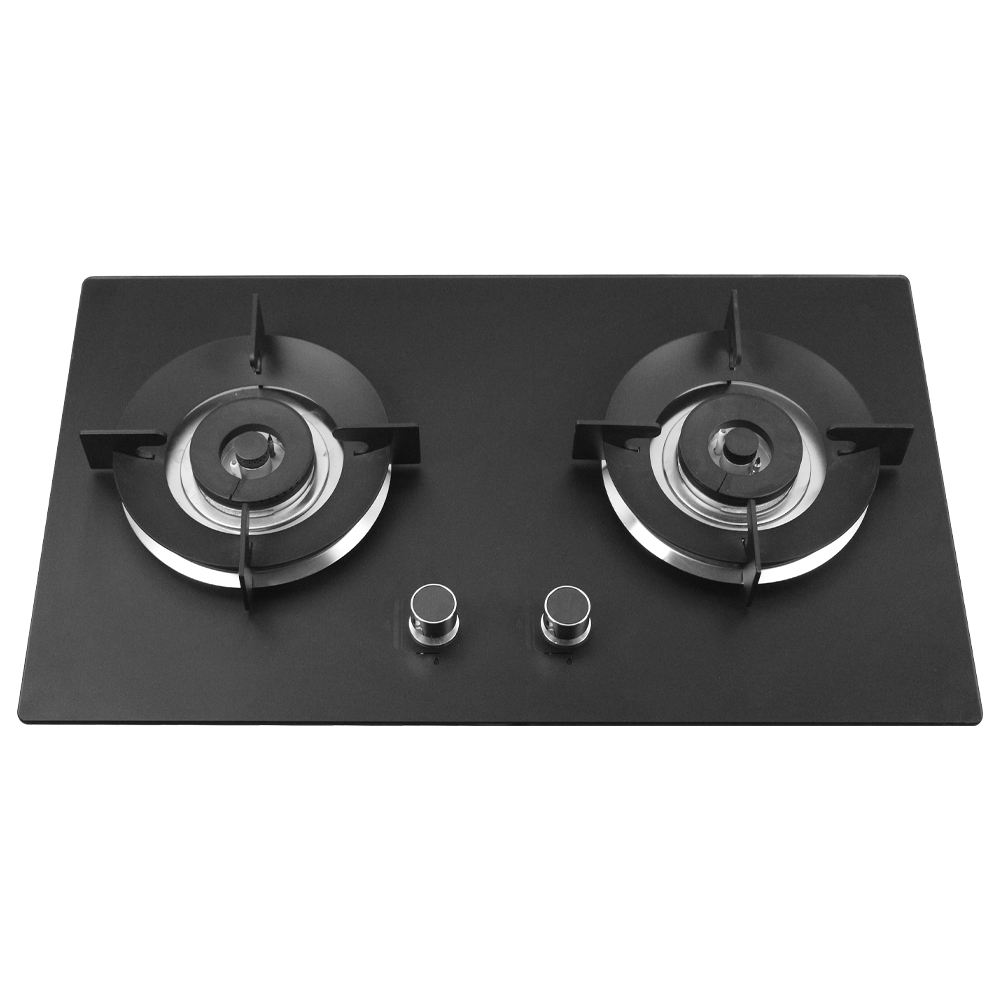
A 36-inch gas range is a freestanding or slide-in gas cooker built to fill a 36-inch-wide opening, usually with five or six burners and a wider oven than a 30-inch model. It is the right choice when the kitchen has the cutout, gas supply, and ventilation for a larger cooking zone, and when several dishes are cooked at once.
The decision should start with fit and workflow, not with a headline BTU number. A 36-inch range can improve spacing between pans and give a larger oven, but it can also force costly cabinet changes if the opening, gas line, or hood clearance is wrong. Confirm the cutout, depth, height, electrical needs for ignition, and ventilation before comparing burner layouts.
What a 36 Inch Gas Range Adds—and What It Does Not
The extra width mainly buys burner spacing, grate area, and oven width; it does not guarantee better simmer control or more even baking. A well-designed 30-inch range can cook excellent meals, while a poorly planned 36-inch range can become a tight, poorly ventilated nuisance.
| Range width | Typical burners | Typical oven capacity | Best fit | Main watch-out |
|---|---|---|---|---|
| 30 inches | 4 to 5 | 4.5 to 5.5 cu. ft. | Smaller kitchens, simpler workflows | Less room between large pans |
| 36 inches | 5 to 6 | 5.0 to 6.5 cu. ft. | Frequent multi-dish cooking | Needs a true 36-inch cutout and stronger hood plan |
| 48 inches | 6 to 8 | 6.0 cu. ft. and up | Large kitchens, heavy entertaining | Bigger footprint, larger hood, higher gas demand |
A 36-inch range is often the practical middle ground: it gives six-burner flexibility without the 48-inch footprint that can overwhelm a normal residential kitchen. The gain is most obvious when you use a large stockpot, a sauté pan, and a skillet at the same time.
Burner Layout and Control: The Specs That Matter Most
A good 36-inch range gives you both a hot sear burner and a stable low simmer; a high total BTU figure alone tells you very little. Look at the output of each burner, the spacing between them, and how precisely the knobs hold a low flame.
High Heat and Low Simmer
For everyday cooking, one burner in the 15,000 to 20,000 BTU range is useful for searing, wok cooking, and rapid boiling. Just as important is a simmer burner that can hold a low flame without flickering or scorching. A range with a very powerful main burner but no gentle low setting is less useful than its spec sheet suggests.
What to Check on the Cooktop
- At least one true low-simmer burner, ideally rated below 1,000 BTU.
- Enough space between burners for a 12-inch skillet and a stockpot.
- Heavy, stable grates that let pans slide without tipping.
- Knob feel and marking clarity, because gas control is mechanical.
- Sealed or easily cleaned burner bases, depending on maintenance preference.
Six burners are common on 36-inch models, but five well-spaced burners can be better than six crowded ones. If the cooktop has a griddle or a central high-output burner, confirm that it does not reduce access to the rear burners.
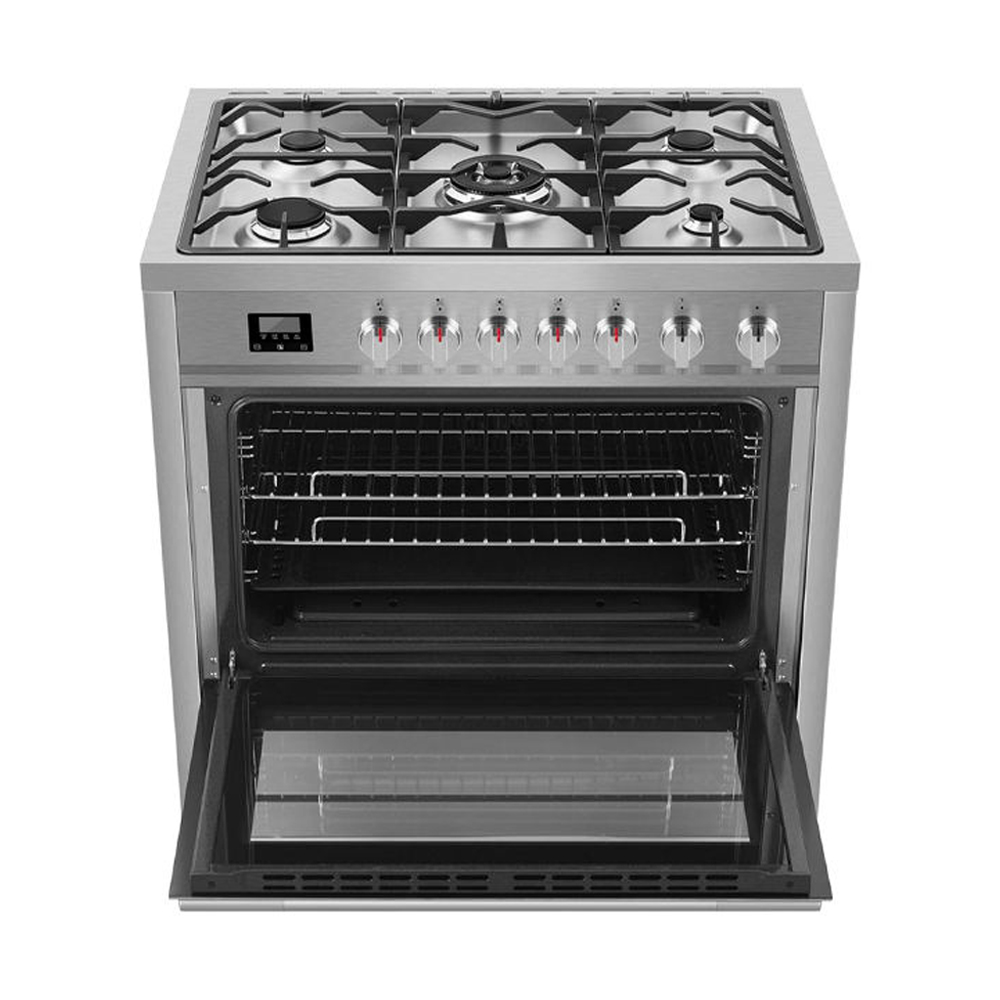
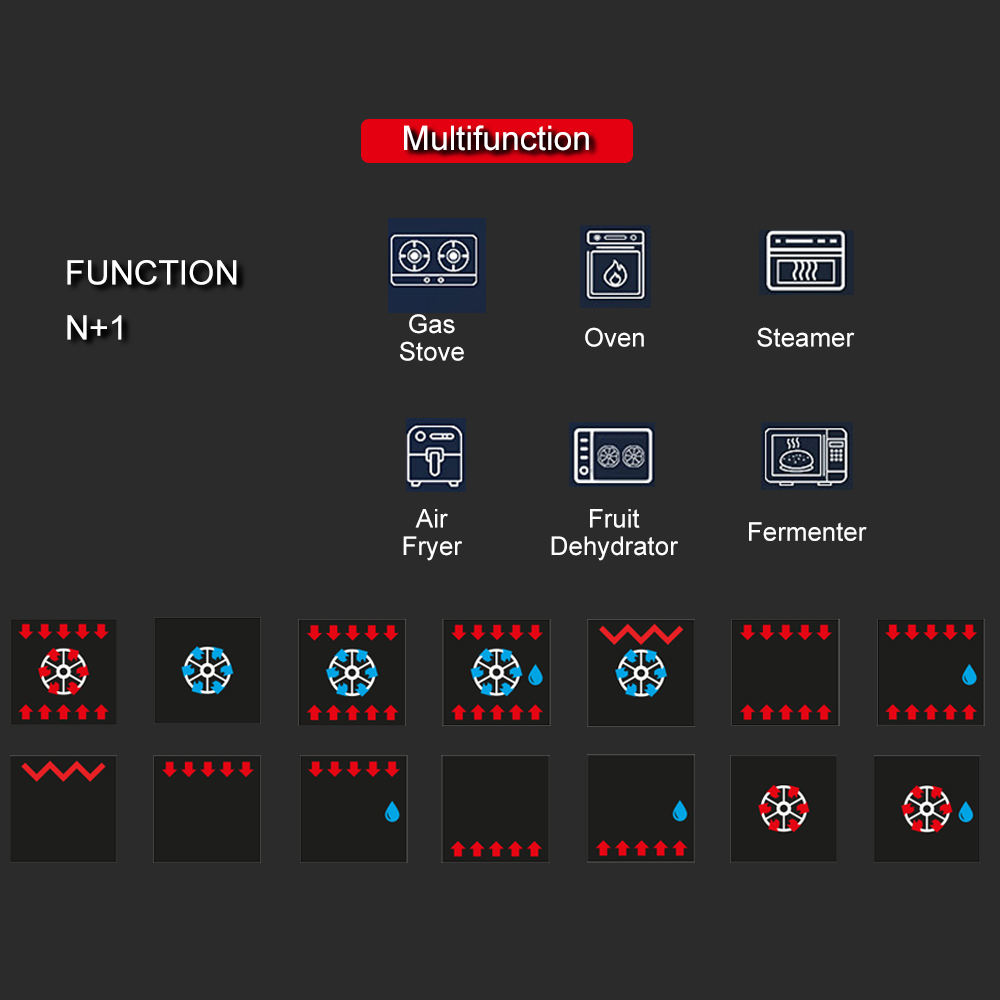 Kitchen Digital Timer Control 6 Burner Cooker with Oven Grill Gas RangeKitchen Digital Timer Control 6 Burner Cooker with Oven Grill Professional Gas Range This product is a kitchen appliance that combines multi-function, high efficiency,...View Product →
Oven Capacity, Fuel Type, and Baking Results
All-gas ranges are simpler to install; dual-fuel models can give tighter oven temperature control if a suitable electrical circuit is available. The cooktop remains gas in both cases, so the real decision is whether the oven should run on gas or electricity.
All-Gas or Dual Fuel?
An all-gas range needs only a gas connection and usually a standard electrical supply for ignition. A dual-fuel range combines a gas cooktop with an electric oven, which can be an advantage for baking, roasting, and precise low-temperature work, but it requires a 240V circuit in many homes. If the kitchen lacks that circuit, the installation cost can erase the cooking benefit.
Oven Features That Change Daily Use
- Usable capacity matters more than gross capacity; check rack positions and broiler clearance.
- Convection can improve browning and speed, but it is not a substitute for accurate temperature control.
- A capable broiler is useful for sheet-pan meals, melting, and finishing.
- Door design and rack glide affect comfort, especially with heavy pans.
For a 36-inch range, an oven around 5.0 to 6.5 cubic feet is typical. That extra width can fit wider pans and multiple racks, but large oven volume also takes longer to preheat and can be less efficient for small batches.
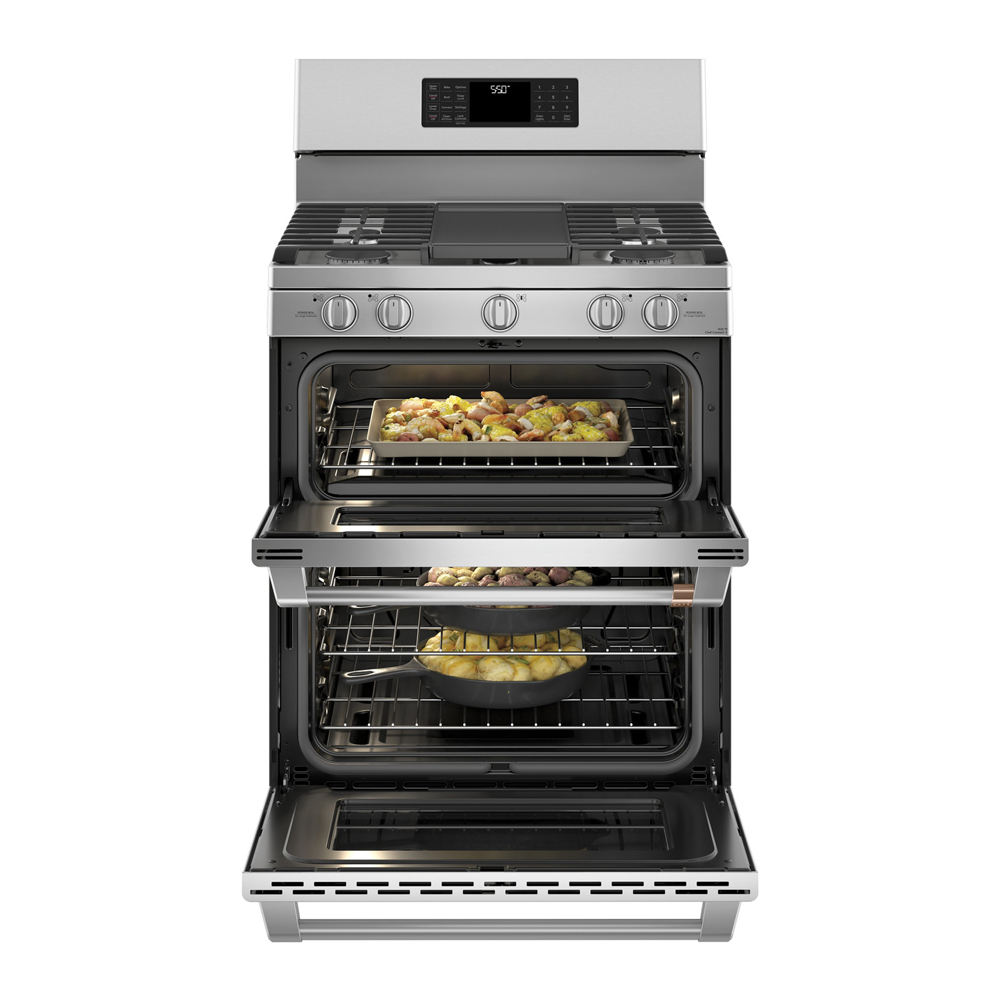
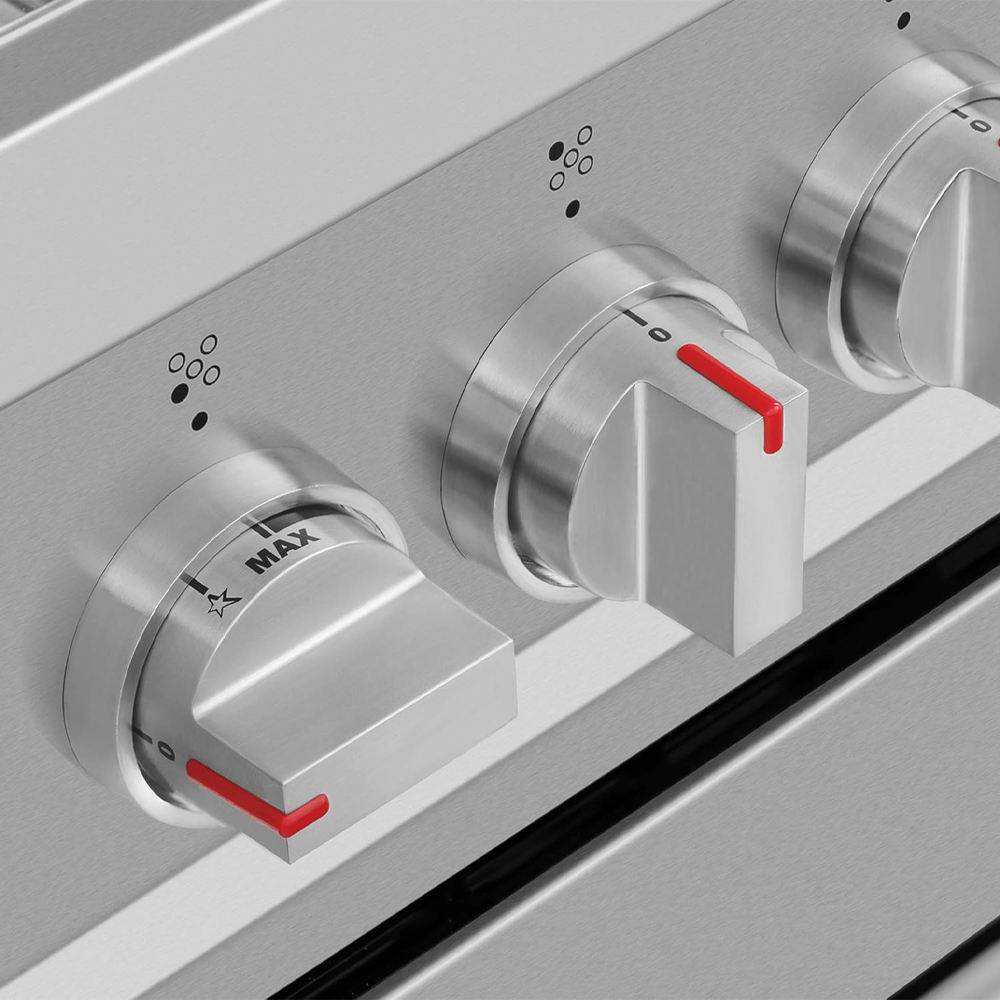 Six-Burner Gas Range with Oven for Kitchen UseReview six burners, stainless and cast-iron construction, and electronic ignition here, then confirm cutout, hood, and gas-line needs before ordering.View Product →
Fit, Ventilation, and Installation Risks
Measure the opening and plan gas, electrical, and hood work before ordering; installation errors cost more than most burner upgrades. A 36-inch range is not simply a 30-inch range with extra width—it changes cabinet clearance, hood size, and sometimes the gas line capacity.
- Confirm the actual cutout width; nominal 36-inch models may need a slightly wider opening.
- Check height and depth, including handles, knobs, and the gas connection behind the unit.
- Verify gas type and pressure, and keep the shutoff valve accessible.
- Plan for ignition power, and for a 240V circuit if choosing dual fuel.
- Match the hood to the range width and cooking style; 36-inch and 42-inch hoods are common, with airflow sized to the burners and duct run.
- Keep required clearance from side walls and combustible cabinets, especially near high-output burners.
Ventilation is a frequent weak point. A powerful 36-inch gas range can produce substantial heat, moisture, and cooking grease. A hood that is too small or ducted poorly may leave odors and grease in the kitchen even if the range itself performs well.
How to Compare 36 Inch Gas Ranges Before Buying
The best buying process is a shortlist built around fit, burner control, oven use, service, and installed cost, not a single showroom impression. Write down the kitchen constraints first, then compare only the models that pass those checks.
Fit
Cutout width, depth, height, gas connection, and door swing.
Control
Low simmer, high heat, burner spacing, and knob precision.
Whole cost
Range price, hood, ducting, electrical work, and installation.
Use the gas range product section to shortlist models by width, burner count, and oven size, then score each candidate against the same checklist. A range that fits the cutout but needs a new hood and electrical circuit is not the same value as one that drops into an existing setup.
- Verify the cutout and clearance from the manual, not from a showroom floor model.
- Compare per-burner output and low-simmer performance.
- Check oven capacity, rack layout, and broiler position.
- Confirm service access and parts support before ordering.
- Budget for ventilation and installation, not just the appliance.
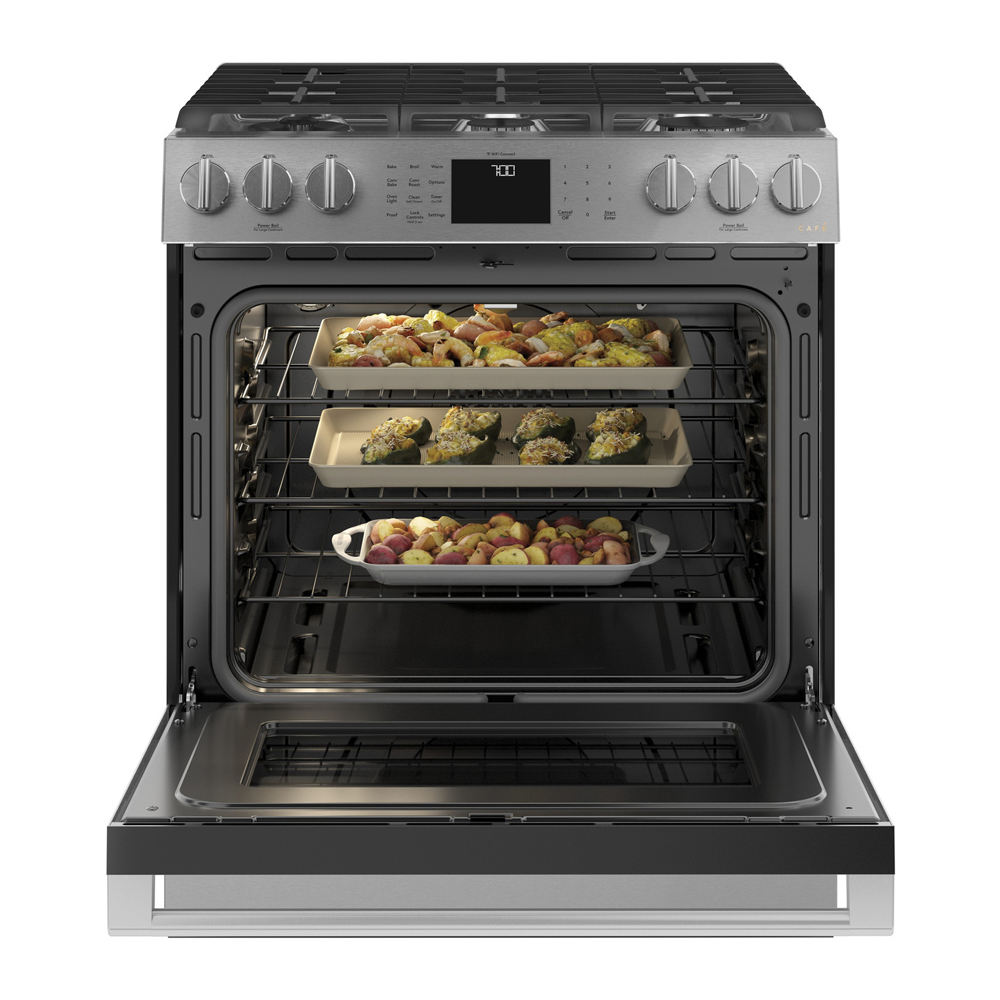
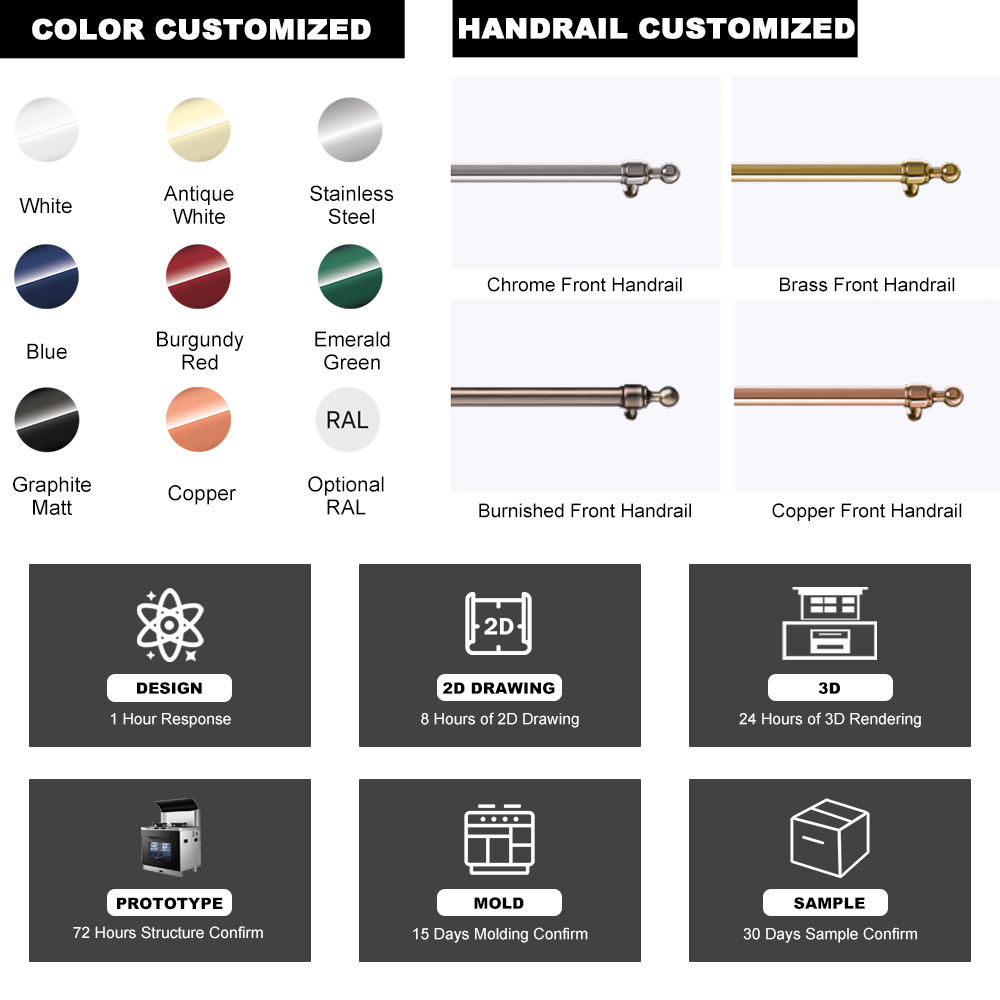 Digital Timer Slide-In Gas Range and OvenCompare this slide-in gas cooker’s digital timer, multiple cooking modes, and precise oven control against your checklist; confirm cutout and ventilation before choosing.View Product →
FAQ: 36 Inch Gas Range Questions
Is a 36-inch gas range too big for a small kitchen?
It can be. A 36-inch range needs a wider cutout, more clearance, and a stronger ventilation plan than a 30-inch model. In a small kitchen, a well-planned 30-inch range often gives a better workflow than a cramped 36-inch installation.
How many burners should a 36-inch range have?
Five or six burners is typical. Six is useful for multi-dish cooking, but burner spacing matters more than the count. Check whether large pans can sit side by side without blocking rear burners.
What cutout size does a 36-inch gas range need?
It varies by model, so use the manufacturer's cutout diagram. Many nominal 36-inch ranges require an opening close to 36 inches wide, but height, depth, gas connection position, and clearance to combustibles must also be confirmed.
Is dual fuel worth it for baking?
Dual fuel can be worth it when the kitchen already has the required electrical circuit and the cook wants tighter oven control. If a 240V circuit must be added, compare the installed cost against an all-gas range with good oven features.
What hood size works with a 36-inch gas range?
A 36-inch hood is the minimum common match; a 42-inch hood can capture more heat and grease from high-output burners. Airflow should be sized to the cooking load and duct run, with make-up air considered in tightly sealed homes.
The practical answer is to buy a 36-inch gas range only after the cutout, gas supply, electrical needs, and hood plan are confirmed. If those fundamentals work, the extra width can deliver better pan spacing and a larger oven; if they do not, the range may fit the showroom but fail in the kitchen.
Compare burner control, oven usability, installation cost, and service support as one package. That approach is more useful than chasing the highest BTU number or the widest cooking surface alone.